

El Bañuelo and the tradition of Arab baths in Granada: a visit to understand the Andalusi legacy
Granada can also be discovered through water. Beyond the Alhambra and the views over the Albaicín, the city preserves spaces that offer a glimpse into everyday life during the Andalusi period. One of the most remarkable is El Bañuelo, considered one of the best- preserved public Arab baths in the Iberian Peninsula and an essential stop for anyone wishing to understand the historical, cultural and sensory dimension of Nasrid Granada.
Visiting this ancient hammam is not simply about stepping into a historic building. It is about approaching a way of understanding the city in which hygiene, rest and social life all played an important role. During a stay in Granada, exploring this space and tracing the legacy of other historic baths is an excellent way to connect more deeply with the destination’s Andalusi essence.
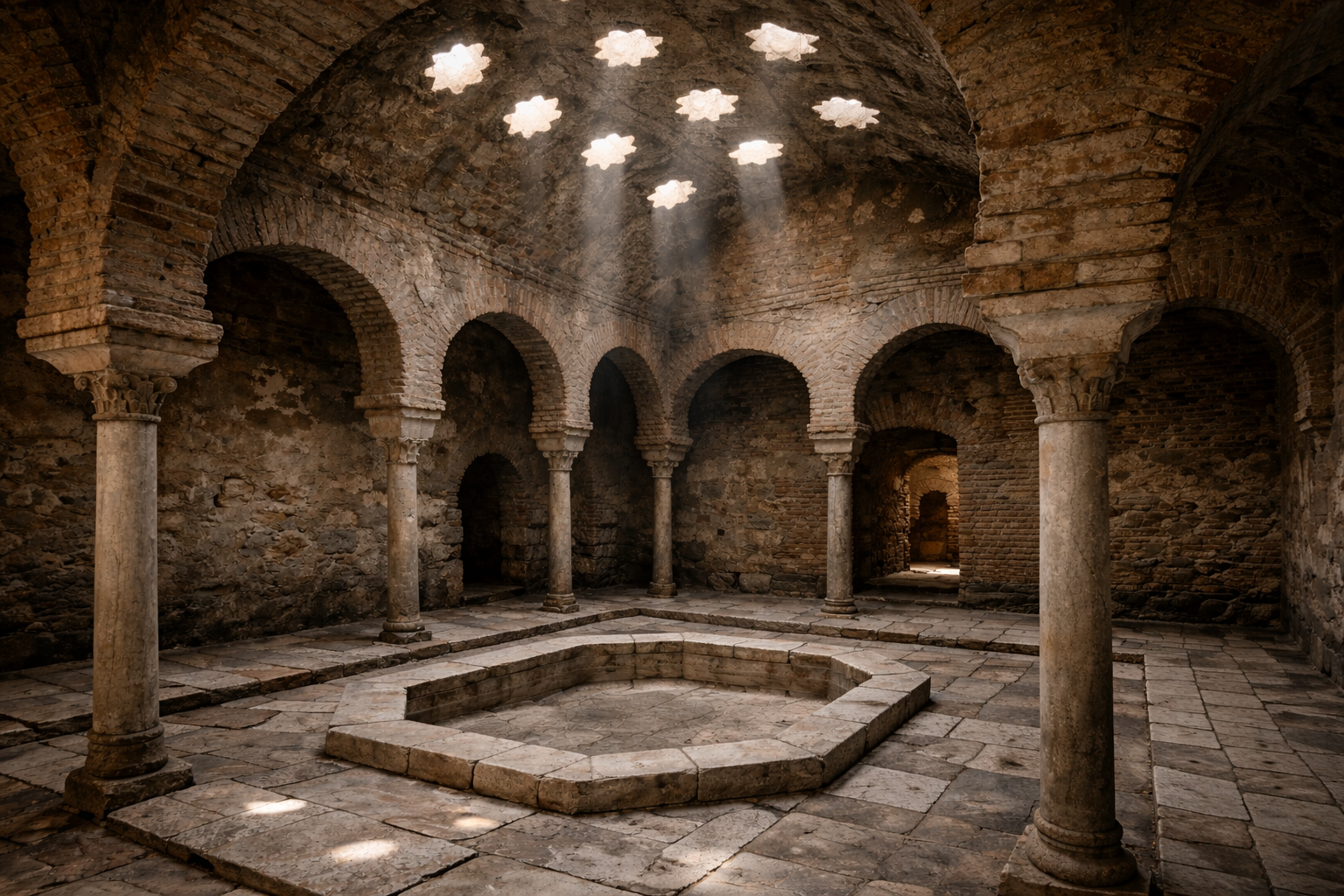
El Bañuelo, one of the great witnesses to Granada’s Andalusi past
Located beside the Darro River, in one of the most evocative areas of the city, El Bañuelo stands out for its heritage value and the exceptional state of preservation of its structure. It is traditionally dated to the 11th century, during the Zirid period, making it one of the oldest surviving civil constructions in Granada. It is also known as Baño del Nogal or Hammam al-Yawza, while its current name, El Bañuelo, became popular in the 19th century, partly to distinguish it from the royal baths of the Alhambra.
What can be seen today allows visitors to imagine quite clearly how these spaces once functioned. Arab baths inherited part of the tradition of the ancient Roman baths, yet within the Islamic world they also acquired a meaning closely linked to purification and wellbeing. They were places of everyday use, fully integrated into urban life, where personal care and social interaction came together in the same setting.
What a hammam was like and what to see during the visit
A visit to El Bañuelo is particularly appealing because it preserves the typical layout of a hammam. The route unfolds through a sequence of rooms with gradual thermal transitions, designed to prepare the body and encourage relaxation. The most photographed space is the warm room, with its serene atmosphere and ceiling pierced by star-shaped skylights through which the light enters in a strikingly distinctive way. This interplay of light and shadow helps explain why these baths continue to fascinate visitors centuries later.
Beyond its architectural beauty, the visit also offers the chance to appreciate essential elements of Nasrid material culture: columns, arches, vaulted ceilings and an interior layout conceived to accompany the flow of water, steam and rest. This is not a spectacular monument because of its scale, but because of its atmosphere. That is precisely where much of its value lies: in its ability to transport visitors to an intimate, everyday and deeply historical side of Granada.
A building that managed to survive the passing of centuries
One of the most striking aspects of El Bañuelo is that it has survived to the present day, while many other baths disappeared or were altered after the Christian conquest. Its preservation was possible, in part, because the building was given later uses that spared it from complete demolition. In time, different restoration works helped recover and protect the site. The Patronato de la Alhambra y Generalife reopened the space to the public following a restoration carried out by its conservation department.
Today it is part of the Andalusian monuments Today, it forms part of the group of Andalusi monuments that can be visited in Granada with a single ticket, alongside sites such as the Corral del Carbón, the Casa Morisca del Horno de Oro and Dar al-Horra. In addition, admission to theseAndalusi monuments is free on Sundays, making the visit an especially appealing plan for a cultural getaway in the city.
Beyond El Bañuelo: other baths and the tradition of water in Granada
Although El Bañuelo is the most accessible and best-preserved example outside the palace complex, it is not the only testimony to this tradition. Granada preserves other vestiges of historic baths and, within the Alhambra, the baths in the palace surroundings reveal a more refined version linked to courtly life. All of this confirms the extent to which water, bathing and spaces of rest formed part of Nasrid urban culture.
That legacy also remains alive in Granada today. The city still maintains a very special relationship with the idea of bathing as pause, wellbeing and experience. For this reason, after a day spent exploring historic streets, cármenes and monuments, it makes perfect sense to complete the journey with moments of rest inspired by that same tradition of calm and personal care. This connection between heritage and wellbeing is, in fact, one of the most beautiful ways to experience Granada.
Historic Granada and contemporary rest: a meaningful getaway
Discovering El Bañuelo is a way of looking at Granada in greater depth. Not simply as a monumental city, but as a place where Andalusi customs, architecture and sensibility are still present in many details. For travellers seeking more than a checklist of sights, this kind of experience brings context, beauty and a much more authentic connection with the destination.
And that is where the room makes the difference. Seda Club is a 5-star boutique hotel stars located in the heart of centre of Granada, next to the Cathedral and the AlcaiceríaAnd this is where your stay makes all the difference. Seda Club is a 5-star boutique hotel in Granada, located right in the city centre beside the Cathedral and the Alcaicería, with a restaurant, rooftop and a wellness space designed to prolong that feeling of pause and sophistication after exploring the city. If you are planning a cultural getaway to discover Andalusi Granada, staying at a luxury hotel in Granada such as Seda Club is the best way to complete the experience with history, design and comfort. luxury hotel in Granada as Seda Club is the best way to complete the experience with history, design and comfort.
