

Passeig de Gràcia: a Modernist walk through the heart of Barcelona
Some streets you simply walk down. Others tempt you to stop at every façade, and Passeig de Gràcia is one of those. At the centre of the Eixample, this avenue brings together some of the most admired works of Catalan Modernisme, alongside distinctive boutiques, galleries and places that reflect Barcelona's cosmopolitan character.
To see it on foot, try this Modernist walk along Passeig de Gràcia. It starts at number 29, where you'll find Hotel Club 29, and takes you past buildings that tell the story of a city open to art and new ideas.
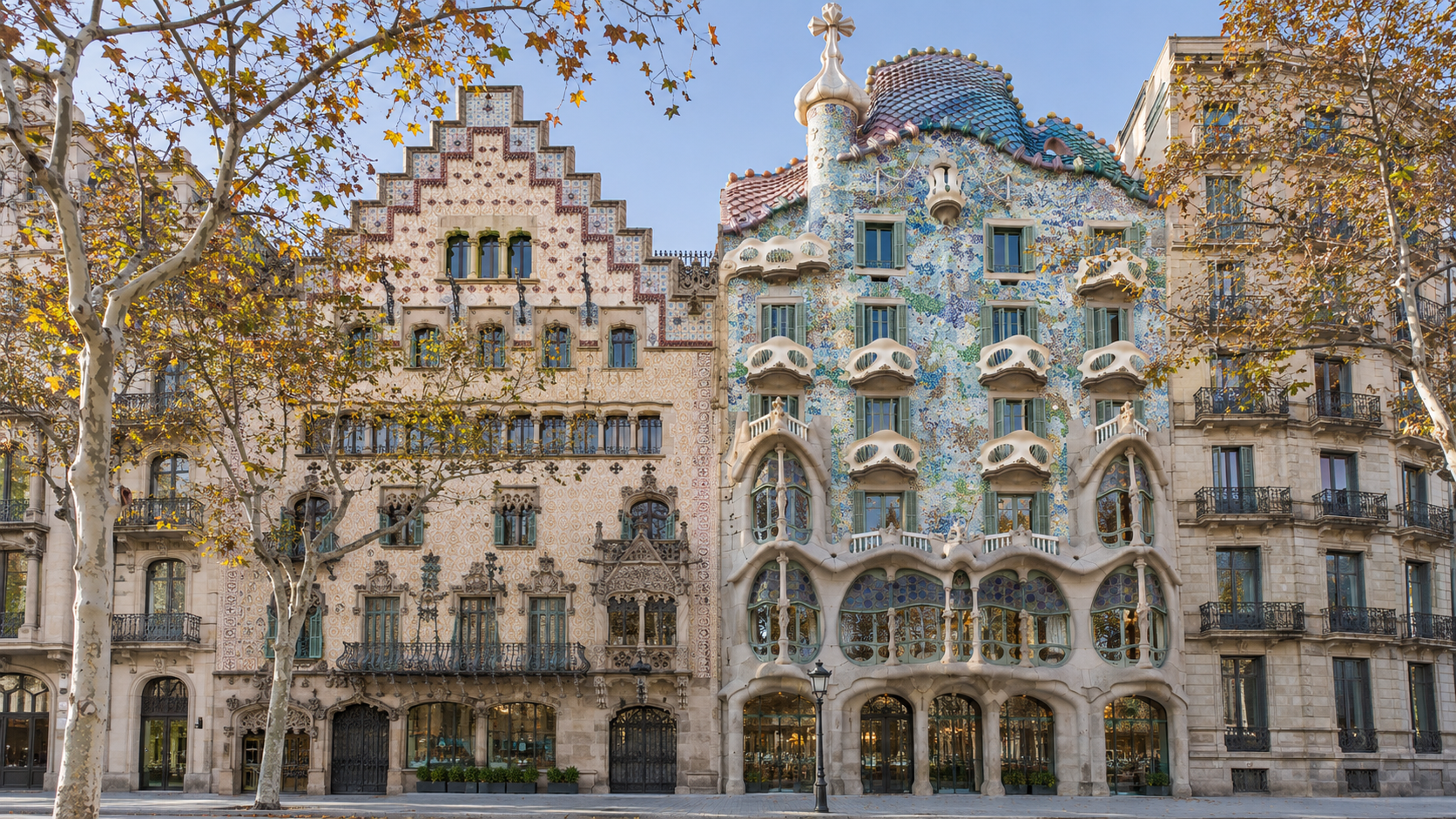
Passeig de Gràcia: an avenue that keeps you looking up
In the late 19th century, Barcelona's growth turned the Eixample into a showcase of architecture and creativity. Catalan bourgeois families turned to some of the most innovative architects of the day to design their homes. The results are still there to see: façades with relief work, wrought-iron balconies, stained glass and shapes that seem drawn from nature.
One of the great things about this walk is that you can start enjoying it without setting foot in a museum. Just stroll, look up and take in details that are easy to miss among the shop windows and café terraces. Even the ground you walk on is part of the experience: the paving with organic motifs designed by Antoni Gaudí and Pere Falqués's ornate lampposts with built-in benches complete the look of the avenue.
Modernist walk along Passeig de Gràcia: four must-see stops
From Hotel Club 29, at Passeig de Gràcia 29-31, you can follow the route north. A few steps on, you reach the three buildings that make up the famous Manzana de la Discordia, or Block of Discord, before carrying on to La Pedrera. The four stops are close together, so they're ideal for a morning exploring Barcelona's Modernisme.
Casa Lleó Morera: the art of small details
First stop is Casa Lleó Morera, the work of Lluís Domènech i Montaner. Its façade draws your eye to the balconies, the sculptural elements and the rich decoration that made Modernisme a truly collective effort by architects, craftspeople and artists. It's worth lingering here before moving on: this is an excellent introduction to the range of styles you'll find along the same stretch.
Casa Amatller: a medieval touch in the middle of the Eixample
Next, Casa Amatller surprises you with its stepped gable, so different from the curving lines we tend to associate with Modernisme. Josep Puig i Cadafalch remodelled it for the Amatller family and gave it a historically inspired façade full of personality. If you're curious about how families in Barcelona lived at the time, check the visit options for the house museum and book in advance.
Casa Batlló: Gaudí's imagination turned into architecture
Practically next door, Casa Batlló proves that a façade can tell a story without words. Its organically shaped balconies, the colour of its mosaic and its rippling roof make it one of Barcelona's most recognisable images. You can't help stopping in front of it, though you can also round off the experience with a visit inside if you'd like a closer look at how Gaudí approached light, materials and space.
La Pedrera: a façade that seems to be in motion
Continue along the avenue to Casa Milà, known as La Pedrera. Its undulating forms and iron balconies contrast with the geometry of the Eixample, while the roof terrace has become one of its main attractions. Taking in the sculptural chimneys and finding out about the design choices behind the building helps you see why Gaudí still sparks so much curiosity.
Beyond the buildings: Barcelona's design, shops and flavours
The walk doesn't end with the façades. Passeig de Gràcia is also the place for designer shop windows, international brands and corners where you can take a break. Between buildings, turn down one of the Eixample's side streets, where you'll come across cafés, specialist shops and small spaces that show a more everyday Barcelona.
If you feel like extending the walk, head over to Rambla de Catalunya, which runs parallel to Passeig de Gràcia and is known for its café terraces and neighbourhood feel. It's a good spot to have a coffee, stop at a bookshop or find somewhere to eat before heading back to the avenue.
Tips for enjoying the Modernist walk
Can you explore Passeig de Gràcia on foot? Yes. All four buildings are within easy walking distance of one another, so you won't need transport between stops. You can see the exteriors at an easy pace in a morning; if you want to go inside several of them, allow more time.
To enjoy the interiors, check each house's official website before you travel, as opening hours, capacity and visit options can change. Wear comfortable shoes and, if you'd rather photograph the façades with fewer people around, set off first thing. Don't try to see everything in a hurry: the interesting part is finding out what makes each building different.
Hotel Club 29: a way to experience Modernist Barcelona
Coming back to where you started is part of the plan too. After your walk along the avenue, Hotel Club 29 is a contemporary retreat behind a historic façade on Passeig de Gràcia. Its rooms and suites, its food and cocktails, and its hidden terrace invite you to swap the pace of the city for a moment of calm.
The concierge team can add to the experience with recommendations tailored to your interests, from cultural visits to new places to eat. Getting to know Modernist Barcelona isn't only about admiring its buildings, after all: it's also about finding your own way of living in the city, even if only for a few days.
